


When Banks Say No: Could Nigerian Cash-Savings Circles Take Hold in Black America?
Shared savings offers an alternative to for minorities denied access loans, credit
Cash savings by any other name spends just as sweet
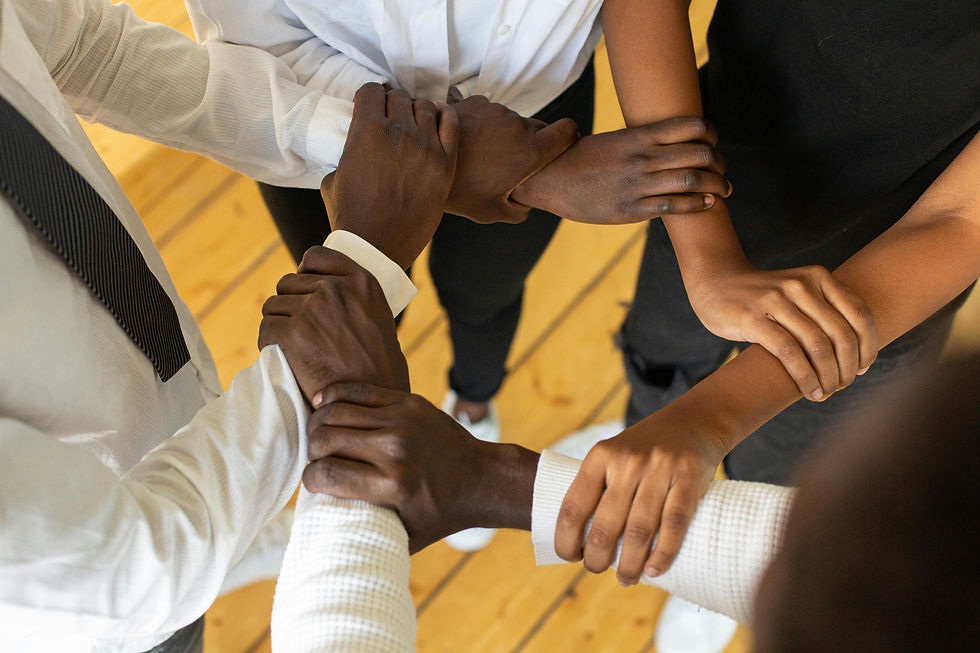
A conversation among members of R/Black ladies, a community on Reddit, highlighted the diverse names for shared savings traditions across the world: Pardna in Jamaica, Chamas in Kenya, Likelemba in the Democratic Republic of Congo and Susu in the Caribbean. In Muslim countries, they provide financial assistance in the face of Islamic finance decrees that prevent women from receiving bank loans. In India, cooperatives like this are regulated and widespread, estimated at $49 billion annually. Whichever part of the world you look, whatever you call it, cooperative savings circles prevail in developing countries and immigrant communities. In a rotating savings and credit association (ROSCA), members put a sum of money into a monthly "pot," with the total being paid out to one individual member who is free to spend or invest the money as they see fit.
In Nigeria it’s known as Ajo, Esusu and Adashe. Veronica Alana, a Nigerian trader and an Ajo coordinator explains its mechanism, “For me, Ajo is like helping one another. You get to collect money based on your number in the Ajo plan after making a weekly, bi-weekly or monthly contribution to the coordinator. With Ajo, unlike banks, you collect the lump sum when it comes to your time without paying interest. For some (uneducated) women, going to banks for loans and assistance means trying to get something out of reach; you have to answer so many technical questions which are usually unappealing.”
With no legislative agencies to regulate and ensure members’ cooperation, how do they hold themselves accountable? Afia Poku, a Gen Z Ghananian and an invariant member amongst other women, believes Ajo thrives through connections that go deeper, “We all know each other's names, phone numbers and even house addresses for accountability. That way, everyone cooperates. Ajo helps me pay my bills and make any big girl purchase.”
When A Savings Circle Becomes a Lifeline
Over the years, this association has been chiefly dominated by women, becoming much more of a safety net, and an escape route for Black women to flee from their abusers. This is not surprising as financial dependency is one of the biggest chains keeping survivors trapped in abusive situations. Systems like this are one of several ways women are utilizing financial freedom to fight back. Angel is a witness, ”I was saving secretly, and he knew nothing about it. I collected the money by hand less than 24 hours before I planned to leave, and even when he found out — right before I left — that I wasn’t planning to come back from my ‘visit’ to my mum, I knew I could still make a run for it because I wasn’t relying on him,” she says. “Without that financial safety net, I would have and been both scared helpless. But having access to that money, even though frightened, gave me the courage to take control to do what was necessary to save myself and my child,” she concludes.
While it serves an escape route and a financial gateway, cooperatives like this also become a broader support network, a sisterhood. Veronica, the Ajo leader, confirms it, “There was a time when one of us was seriously sick, and we had to change the payout format. We exchanged her pay with another person's and even though it affected ours too, we had the greater mission to help. Once she was fine, she repaid, and we reset the payout plan. One thing about Ajo is that you have to endure and support others because you never know what may happen.”
Ajo has been used to buy homes, send kids to college, start businesses and host crucial events when banks say no. Bosede Omopariola, a consistent member of Ajo shares, “One of us used hers to start a fish business, and she's thriving now. As for me, when I collected my own contribution of ₦600,000 ($414), I used it for the burial of my father. I didn't borrow from the bank with its huge interest; I only contributed money.”
Which begets the question, why is this specific, and effective sister-powered model not a common feature of the financial safety net for women in the U.S.?
In studies of African rotating savings and credit associations (ROSCAs), scholars, especially Salewa Olawoye-Mann, as she writes in her chapter for the Oxford University Press Volume “Beyond Racial Capitalism: Cooperatives in the Diaspora” emphasizes these groups are deeply embedded in community ties where social standing is paramount. As Diana, Veronica and Bosede earlier described, the cost of defaulting isn't just financial, it's a permanent stain on your reputation, family’s name, and in this time of increased social media, media identity too. In the more ephemeral and geographically scattered communities of the U.S, that level of ingrained, multi-generational social capital is harder to replicate.
Again, the American financial ethos has long prioritized formal, institutionalized systems over collective community-based solutions as Mark Rank, Herbert S. Hadley Professor of Social Welfare observes. “From its beginnings, America has emphasized and celebrated the idea of rugged individualism. The problem is that while individual agency and effort is important for getting ahead in life, it is often not enough." The African Ajo tradition therefore goes against and challenges these dominant Western financial narratives.
There is also a wild obsession with building a credit score in America that automatically makes ROSCA “unsophisticated” or “razz.” As a report notes, “Building and maintaining a strong credit record is often viewed as a step toward greater financial well-being.” This dominant credit-score narrative makes informal systems harder to validate or integrate into mainstream financial safety-net frameworks.
In an interview with Open Americas, Dr. Caroline Shenaz Hossein reflects on the enduring significance of informal, community-based financial systems like ROSCAs across the African diaspora. She emphasizes these models are far more than economic tools; they are rooted in cultural legacy, solidarity and resistance. As she put it: “African-inspired ROSCAs in the Americas, in Canada, the Caribbean and the United States — are deeply valued African traditions that many people of African descent have carried on to address their needs and to demonstrate solidarity in a society that excludes them.”
Yet despite this track record of resilience and inclusion, they remain unrecognized by mainstream financial policy, seen not as solutions, but as side practices. Their invisibility in U.S. financial safety nets reflects not a lack of effectiveness, but a failure of institutional recognition. Perhaps, the question isn’t why these models aren’t more common but why a system that claims to serve all women continues to overlook the ones already serving each other.


Comments