


2025 News: Triumph, Tragedy and Black Women

From policy shifts to cultural controversies: key news events of 2025 that shaped the lives of Black women

2025 was something like a Charles Dickens novel: It was the best of times, it was the worst of times. For the U.S., it was a year of triumph and tragedy, controversy and challenge. We've compiled a list of the most important events that happened this year that involved or affected Black women.
1. AI Memes of "Welfare Queen" Stereotypes
It was Ronald Reagan who first weaponized the image of the welfare queen stereotype, when he conjured up the case of Linda Taylor, the so-called “welfare queen,” who allegedly scammed the welfare system out of $150,000 as part of his 1980 presidential campaign.
Trump administration’s efforts to drastically reduce the SNAP program’s budget began with the Department of Government Efficiency (DOGE) recommendations to cut the program’s budget and tighten eligibility requirements as a way of reducing enrollment and giving existing recipients fewer benefits. The SNAP budget was reduced by approximately $186 billion over 10 years by the One Big Beautiful Bill Act, which became law in 2025. Around this time, a proliferation of fake, AI-generated videos depicting Black women as abusing government assistance programs like SNAP were widely circulated on social media, reinforcing decades-old, racist myth that mostly Black women get SNAP benefits when it is mostly single white women who do.
2. Trump Revokes Kamala Harris Secret Service
As America’s first Black, female vice president and the first Black woman presidential candidate on the ballot as a major party nominee in 2024, Kamala Harris made history. Unfortunately, not everybody was pleased with a Black woman seeking the presidency. The internet was flooded with crudely altered photos and false narratives about her qualifications or personal life continuing to spread even after being debunked. Some even questioned her Blackness, chief among them was her political opponent Donald Trump.
Vice President Kamala Harris remained a frequent target of Trump, even though he defeated her in the 2024 election. One of the most egregious things he did was revoke Harris’ Secret Service detail, just before she was to embark on her national book tour, which could have placed her in grave danger.
Read BGX's coverage: The Electability of Women is a Stupid Question, so Stop Asking It
3. Deployment of National Guard to Cities with Large Black Residencies
Within eight months of taking office, Pres. Trump federalized National Guard troops and deployed them to Washington D.C., under the guise of fighting crime, even though crime was on the decline in D.C. He’s sent troops to Baltimore, Chicago and Los Angeles — all with high numbers of Black residents – where they met fierce resistance from local activists.
The Trump administration launched “Swamp Sweeps” in December, deploying more than 200 Custom and Border Patrol agents to Louisiana and Mississippi to arrest more than 5,000 people. Despite local reports of declining crime rates and opposition from local officials, President Trump also deployed National Guard troops to Memphis, Tenn., in late 2025 to combat violent crime as part of a federal operation; some local officials deemed the deployment unnecessary and potentially unlawful. Deputized by U.S. Marshals, the troops served as extra eyes and ears for the Memphis Police Department. They focused on high-crime areas, but their authorization to make arrests was supposed to be contingent upon requests from local police. This action followed similar federal deployments to other cities, such as Portland. Again, Trump cited high crime statistics as justification, despite recent local improvements, which led to legal challenges from Tennessee officials.
Read BGX's coverage: "Close Ranks and Fortify”: Black Liberation Scholar Dr. Charity Clay Advises on Memphis Federal Occupation
4. Trump’s Attempts at Firing Lisa Cook
That’s Lisa Cook, the first Black female governor of the Federal Reserve. Before serving as a Federal Reserve governor, the Georgia native was elected to the Board of Governors of the Bank of Chicago. She is well-respected within economists’ circles.
In August, Donald Trump called for Cook’s removal due to allegations she committed mortgage fraud in documents for two properties in Ann Arbor, Mich., and Atlanta, before joining the Fed. These unfounded allegations were made via tweet by Bill Plute, Trump’s director of the Federal Housing Finance Agency.
Thus far, his attempts have been thwarted due to a Supreme Court decision that forbids him from removing her until the court can hear arguments on firing Cook in January.
5. The Rise of Unemployment Among Black Women
This year, the unemployment rate for Black women has been steadily climbing, reaching 7.5% in September. This marks a sharp increase from 5.1% in March. According to the Bureau of Labor Statistics, more than 300,000 Black women have been out of the labor force since February.
One of the factors behind more than 300,000 jobless Black women between February and April is corporate America's retreat from DEI (diversity, equity and inclusion). "Long-term career women in the federal government suddenly just being told they need to go for no reason," said Aba Taylor, president of YW Boston. Another factor Taylor points to is the massive layoffs in the federal government. There are more Black women working for the federal government than in the private sector.
Historically, Black people, especially Black women, have served as a barometer for the U.S. economy, and these numbers speak volumes about our current state.
Read BGX's coverage: Black Women’s Wave of Unemployment Poised to Soak U.S. Economy
6. The Banning of DEI
This year also saw Donald issue Executive Order 14151 dismantling Diversity, Equity and Inclusion (DEI) programs across the U.S. He rescinded previous orders for the federal government and contractors, shutting down DEI offices, placing staff on leave, ending related funding and training and redefining sex as binary for federal purposes. Shortly after EO 14151 was issued, many companies in the private sector, such as Meta, Disney, Walmart, Google and Target jettisoned their DEI programs as well.
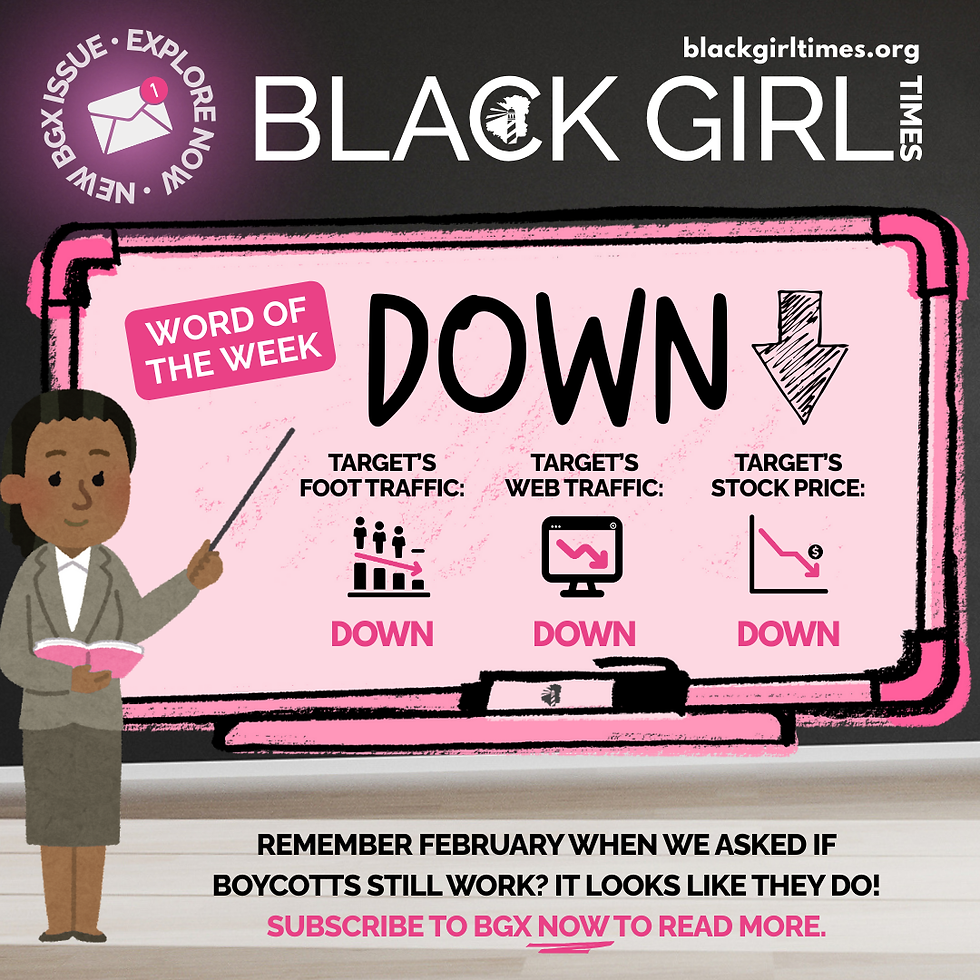
Currently, Target is facing a nationwide boycott due to their elimination
of their DEI programs. Organizers say the company's actions are a betrayal of previous commitments to diversity and equity. Thus far, the boycott has had a significant impact on Target's sales and foot traffic, according to reports.
Read BGX's coverage: Boycotts are About Who You Support Just as Much as Who You Don’t
7. P Diddy’s Conviction
In July 2025, rap mogul Sean "Diddy" Combs was found guilty by a jury on two counts of using transportation to engage in prostitution. However, he was acquitted of the more serious charges: racketeering conspiracy and sex trafficking. Following the verdict, he received a 50-month prison sentence in October 2025. The judge stated the two counts stemmed from his conduct with his ex-girlfriend, Cassie Ventura, and another anonymous victim known as "Jane Doe," who later dropped her suit out of fear for her safety. Currently, Combs is serving his sentence at FCI Fort Dix, a federal prison in New Jersey, and his lawyers are appealing the conviction.
Read BGX's coverage: Dancing in the Devil's Den: Diddy and the Music Industry
8. The Longest Federal Government Shutdown in U.S. History
We saw a 43-day federal shutdown this year – the longest shutdown in U.S. history. It was initiated by Democrats trying to save the American Healthcare Act, which was virtually gutted in the 2025 proposed budget. A government shutdown affects people through lost paychecks for federal employees, (almost 12% at one point being Black women), disruption of essential services like national parks and visa processing, delays in critical programs like SNAP and loan approvals, and negative economic impacts that can reduce economic growth and increase uncertainty. On Sunday, November 9, eight moderate Democratic senators ended the shutdown by voting with Republicans to end the shutdown without assurance that the ACA would be extended.


Comments